Rebates
Government rebates and incentives
The solar rebate, the battery rebate, and the ACT and NSW loans that go with them. What each one is worth, who gets it, and what changes on 1 January 2027. We design the right system for your home first, then apply every rebate you are eligible for, so the quote shows exactly what is included and nothing changes at signing.
How the rebates work
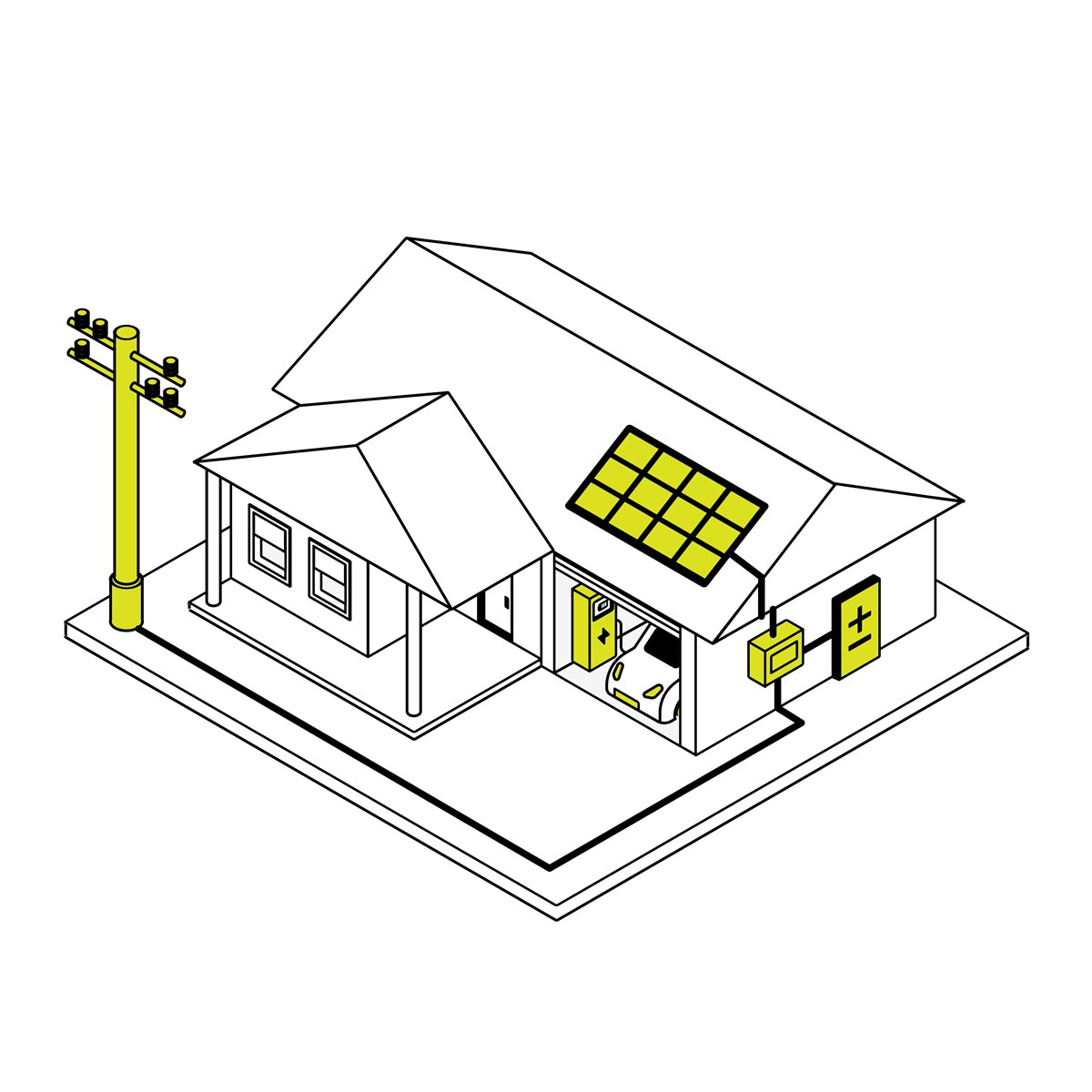
The solar rebate and the battery rebate both come straight off your quote. You don't apply for them and nothing gets paid to you later.
When an eligible system is installed, it earns a set number of small-scale technology certificates (STCs). Those certificates have a market value, and the normal arrangement is that we take that value off your price on the day we quote. You sign one assignment form, we do the rest, and the rebate shows as a line on your invoice.
- It is a discount, not a payment. It reduces what you pay us. It is separate from the feed-in tariff, which is what your retailer pays you for solar you export. You get both, from different places.
- The dollar value moves a little. The rebate is priced on a market with a cap of $40 per certificate. After trading fees, installers typically see around $36. This page shows both, and the exact figure is on your quote.
- It shrinks every year until 2030. Both rebates step down on a schedule written into the schemes, which is why the next section matters.
State programs are different. The ACT runs a low-interest loan and a rebate for concession card holders. NSW runs a zero-interest loan, a hot water rebate, and a battery discount that is coming soon. Each is covered below.
What changes on 1 January 2027
On 1 January 2027 the federal settings step down for solar, batteries and hot water heat pumps at the same time. Same system, same roof, smaller rebate.
System
Until 31 Dec 2026
From 1 Jan 2027
6.6 kW solar, Canberra or Queanbeyan
$1,800
$1,440
10 kW solar
$2,760
$2,200
13.5 kWh home battery
$3,640
$3,040
Hot water heat pump
Model rate x 0.5
x 0.4
Rebate at the $40 reference price, excluding GST. These are scheduled reductions written into the schemes, not a sale that ends. Equipment, labour and certificate prices move too. The honest way to read the table is: the same system costs more to install in January than in December.

The federal battery rebate
The Cheaper Home Batteries Program is the Australian Government's scheme to bring down the cost of home batteries. It is funded nationally, it has been running since 1 July 2025, and most people just call it the federal battery rebate.
The idea is simple. Solar makes most of its power in the middle of the day, and homes use most of theirs in the evening. A battery closes that gap, and the more homes that have one, the less the grid has to carry at peak. So the government pays part of the cost of the battery, and the rebate comes off your quote before you pay a cent.
Any new battery with a nominal capacity between 5 kWh and 100 kWh is eligible. The rebate itself is worked out on usable capacity, and only the first 50 kWh of it counts. The battery has to be installed with solar, either added to a system you already have or as part of a new one.
How the rebate is worked out
The rebate comes in tiers, and the tier depends on how big the battery is:
- The first 14 kWh of usable capacity earns the full rate.
- From 14 kWh to 28 kWh, 60% of the rate.
- From 28 kWh to 50 kWh, 15% of the rate.
Above 50 kWh there is nothing. That is deliberate. The scheme rewards a battery sized for the home, not the biggest unit that fits on the wall.
The rate itself is set in the same certificates as the solar rebate. In 2026 a battery earns 6.8 certificates for every kWh in the first tier. Each certificate is worth up to $40, and installers usually get a little under that once trading fees come out, around $36 in 2026. That is where the two figures below come from.
How much is the battery rebate worth in 2026?
About $270 per kWh
of usable capacity in the first tier, at the $40 cap. Around $245 per kWh at the price installers usually get.
Usable capacity
At the $40 cap
At about $36
10 kWh
$2,720
about $2,450
13.5 kWh
$3,640
about $3,280
20 kWh
$4,760
about $4,280
Excluding GST. The 20 kWh row includes the lower rate on the capacity above 14 kWh. Your quote shows the exact figure for the battery we propose and the market on the day.
When it changes
The rate steps down at the end of 2026, then again in the middle and at the end of every year until the scheme ends on 31 December 2030. A battery installed in December 2026 earns more than the same battery installed in January 2027. Our quote shows the rate for your install date, and if it changes before we install, we tell you before we start.
Who is eligible
- Homeowners, small businesses and community organisations. There is no income test.
- A new battery, 5 kWh to 100 kWh nominal, installed with new or existing solar. A battery on its own does not qualify.
- The battery must be able to join a virtual power plant. You do not have to join one to get the rebate.
- Installed by an installer accredited with Solar Accreditation Australia, using a battery and inverter on the Clean Energy Council approved product list.
- One claim per address. Adding to, replacing or upgrading a battery that has already claimed does not earn a second rebate. The exception: a battery installed before 1 July 2025 can be replaced or expanded, and the new battery can claim.
Like the solar rebate, you never apply for it. We work it out for the battery we propose, show it as its own line on the quote, and handle the paperwork after the install.

The federal solar rebate
If you have heard of "the solar rebate", this is it. It is the main federal incentive for rooftop solar, and it is the reason a system costs thousands less than it otherwise would.
It is not paid into your bank account. It is taken off the price of an eligible system before you pay, as a line on your quote. The rebate has stepped down over the years as panels have become cheaper and more common, and it keeps stepping down every January until the end of 2030. It is still worth thousands of dollars on most homes. How many thousands depends on four things: how big the system is, where you live, when it is installed, and the certificate price used in your quote.
How the solar rebate works
When an eligible system is installed, it earns a set number of certificates based on its size, your location and the year. Those certificates are worth money. You sign one form that lets us claim them on your behalf, we sell them, and the value comes off your price. You never deal with the certificates yourself, and nothing arrives later.
How much is the solar rebate worth in 2026?
About $248 per kW installed
at the certificate price of about $36 that installers typically get after fees. Up to $276 per kW at the $40 cap.
System size
At about $36
Up to, at the $40 cap
6.6 kW
about $1,620
$1,800
10 kW
about $2,480
$2,760
Excluding GST, rounded down to whole certificates. Your quote shows the exact figure for your system and the market on the day.
What sets the amount
- System size. The rebate is per kilowatt, so a bigger system earns more. It applies to systems up to 100 kW, which covers every home and most businesses.
- Where you live. Australia is split into four solar zones, and sunnier zones earn more. Canberra, Queanbeyan and the surrounding NSW postcodes all sit in Zone 3, so there is one rate across our whole service area.
- When it is installed. Every 1 January the rebate steps down. A system installed in December earns more than the same system installed in January.
- The certificate price. Capped at $40, and usually about $36 by the time trading fees come out. It moves with the market, which is why two installers can quote slightly different rebates for the same system.
Who is eligible
- Any owner of an eligible system. It is not means-tested, so it does not matter what you earn.
- A new system up to 100 kW. Since 1 October 2026 the scheme covers systems up to 1 MW.
- Designed and installed by an installer accredited with Solar Accreditation Australia, using panels and an inverter on the Clean Energy Council approved product list, and built to the Australian standards.
- You can claim more than once. A new system at another property, or a replacement system at the same one, earns its own rebate.
How to claim it
- Accept a quote from us with the rebate already shown as a line.
- Sign the one-page assignment form. That gives us the right to claim the rebate on your behalf.
- We install the system.
- We lodge the claim within the 12-month window the scheme allows.
- The rebate stays off your invoice. You never see the paperwork again.
When does the solar rebate end? The last year of the scheme is 2030. Each January until then the rebate steps down, so waiting has a cost even though the scheme is not going anywhere.

Work out what you’ll get back
Calculate your rebates
Solar + battery rebates
Rebate calculator

Solar + battery savings
Savings calculator
Hot water heat pumps
Eligible hot water heat pumps earn a federal rebate too, but the amount depends on the model.
During 2026 the model's registered rate is multiplied by 0.5. For 2027 installs the multiplier is 0.4. The exact model has to be on the Clean Energy Regulator's register, which covers air source heat pump water heaters up to 425 litres. Because every model has its own rate, we show the rebate as a line on your quote rather than quoting one number here.
NSW customers may also get the NSW hot water rebate, below.

ACT support
Sustainable Household Scheme
A government-backed loan, not a rebate, for ACT homeowners. Delivered by Brighte. Summit + Shore is a registered scheme supplier, so once you accept a quote we start the application for you.
Borrow
$2,000 to $20,000
Interest
3% fixed, comparison rate 3.00% p.a.
Repayments
Fortnightly, over up to 10 years
Fees
$0 to set up, $0 account keeping. A $4.99 late fee can apply, capped at $49.90 a year
What it covers: batteries and EV chargers; reverse cycle heating and cooling, hot water heat pumps and efficient electric cooktops; ceiling insulation. Electric vehicles are covered through a separate pathway we do not handle. Standard rooftop solar on its own is not part of the 3% pathway. If you have used the scheme before, the limit is $15,000.
How it works with us: get your Summit + Shore quote, tell us you want to use the scheme, and we lodge the application with Brighte. Brighte assesses eligibility and credit, and confirms the loan before we install.
If you were approved before 1 July 2026 you keep your original rate. If you have seen "zero-interest" attached to this scheme, that now applies only to approved Home Energy Support participants, below.
Home Energy Support Program
Rebates for ACT homeowners who hold an eligible concession card, live in the home they own, attend the required workshop and meet the property value limits.
Support
Maximum
Rooftop solar rebate
50% of the cost, up to $2,500
Electrification rebate: reverse cycle heating and cooling, hot water heat pumps, electric cooktops and ovens, ceiling insulation
50% of the cost, up to $2,500
Total per property
$5,000
Zero-interest loan for approved participants
Up to $10,000
Batteries and EV chargers are not on the Home Energy Support rebate list.
Apply before you accept a quote.
The ACT Government's own words: "Wait for approval, don't accept a quote until your application has been pre-approved by the ACT Government." Accept first and the rebate is lost. Tell us you are applying and we will hold the quote until you have your approval.
NSW support
NSW programs apply to NSW addresses, which includes Queanbeyan and the rest of our NSW service area. An ACT address cannot use them, even though we work on both sides of the border.
Home Energy Saver loan
A zero-interest loan funded by the NSW Government and delivered by Brighte and Plenti. It can only be used with a NETCC-accredited installer. Summit + Shore is one, and the loan is paid straight to us when the job is done, so there is nothing for you to settle in between.
Borrow
$2,000 to $15,000
Interest
0%, comparison rate 0.00% p.a.
Term
Up to 10 years. No fee to repay early
Fees
$0 to set up, $0 account keeping. A $4.99 late fee can apply, capped at $49.90 a year
Who is eligible: combined household taxable income up to $210,000 a year; the property is in NSW and you own it, as an owner-occupier or a landlord; Australian citizen or permanent resident, and you pass the lender's credit assessment. Not social housing or short-stay accommodation.
What it covers with us: rooftop solar, solar and battery, battery only, EV chargers, hot water heat pumps and reverse cycle air conditioning.
Home Energy Saver discount (coming soon)
The NSW Government has announced a discount of up to $4,000 for homeowners and renters with a combined household income up to $80,000, or an eligible concession card. Applications are not open and no opening date has been published. We will update this page the day it opens. Until then, do not count on it in a purchase decision.
Hot water rebate
Replace an electric water heater with a heat pump and the NSW rebate is up to $640. Replace gas and it is up to $330. It sits alongside the federal heat pump rebate, and we apply both through the quote.
Virtual power plant incentive
If your battery joins a virtual power plant, NSW pays an incentive. The amount depends on the provider, the contract and how much of the battery is made available to the grid, so NSW does not publish one figure. It can be combined with the federal battery rebate. Ask us and we will point you to the current providers.
Apartments and strata
For buildings of four or more units there is a NSW battery discount of roughly 30% to 40% with new solar, or 20% to 30% for a battery alone, and a Solar for Apartment Residents grant of up to 50% of project costs for shared rooftop solar, closing 4 December 2026. Talk to us if you are an owners corporation; the rules are specific.


What we do for you
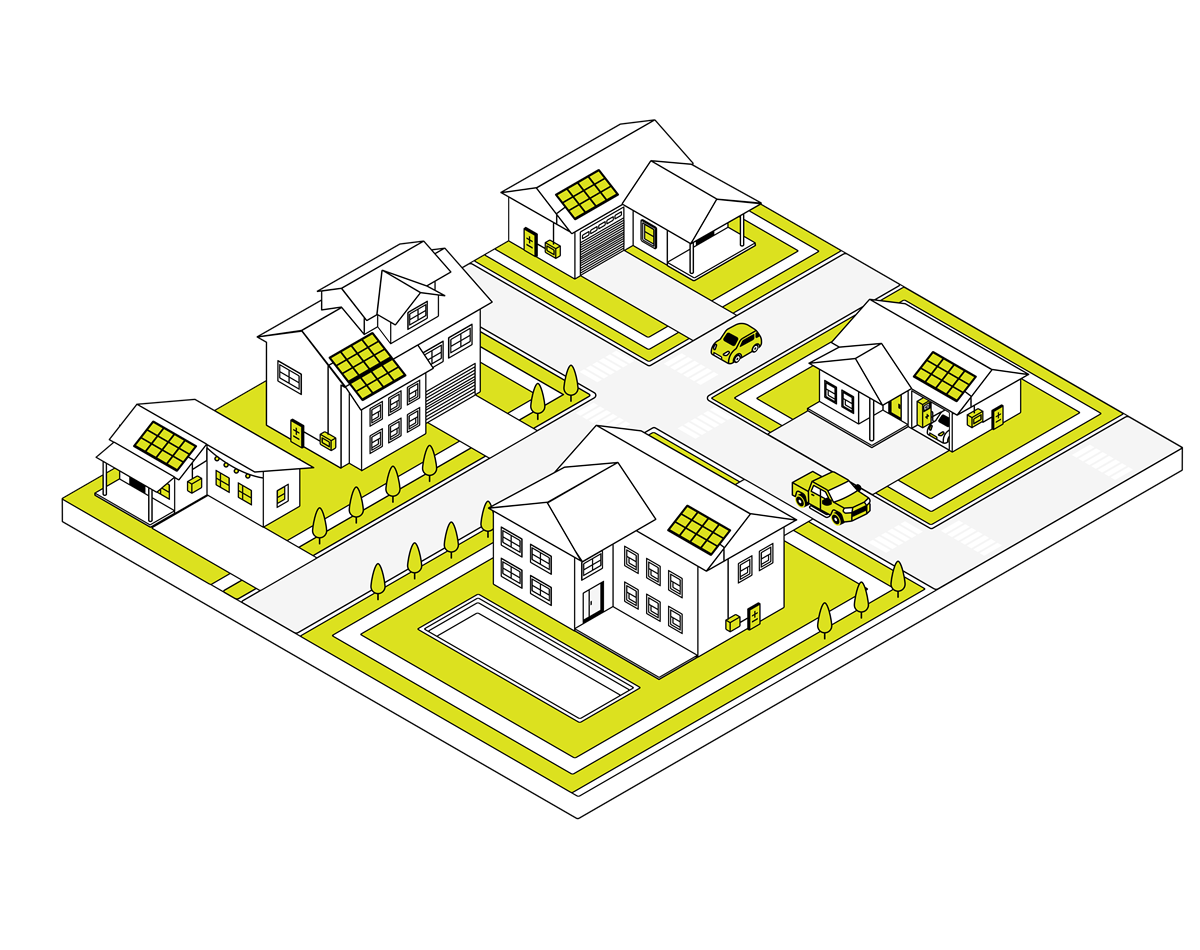
Before we finalise a proposal we check your address, the equipment we are proposing and the rules of each program. Then we show every rebate and finance pathway as its own line, so you can see exactly what has been included.

We check eligibility

Rebates come off the quote

Loans start with us
Questions we get asked
Do I get the rebate as cash?
No. It comes off your invoice. You never receive it separately or wait for it.
Why is the rebate on my quote different from the figures here?
The examples use the $40 reference price and a typical after-fees price. The market moves daily, rebates round down to whole certificates, and the battery rate tapers above 14 kWh. Your quote is exact for the day it is written.
What if the rules change between my quote and my install?
The rebate is set by the install date, not the quote date. If a rate steps down before you are installed, the rebate changes with it. We tell you before install and explain the difference, rather than leaving an old figure on the paperwork.
Can I get the federal rebate and a state program at the same time?
Usually, yes. They are separate programs with separate rules. The ACT loan, the NSW loan and the NSW hot water rebate all sit alongside the federal rebates.
Can I add a battery to solar I already have?
Yes, and the battery earns the full battery rebate. The solar rebate applies to new panels only.
Is the ACT loan still zero-interest?
Not for new standard applicants. It is now a 3% fixed loan. Zero-interest finance is still available to approved Home Energy Support participants.
Still not sure what you are eligible for?
Tell us about your home and we will show you every rebate and loan that applies, as its own line on the quote.
Important information
Certificate prices and government program rules change. The amounts on this page are indicative unless stated otherwise, and the exact support depends on the property, the applicant, the equipment, the install date and each program's conditions. Your itemised Summit + Shore quote is the source of truth for your project. Finance is subject to eligibility, responsible lending checks and the provider's terms.
Last checked against government and scheme provider sources on 23 September 2026.